
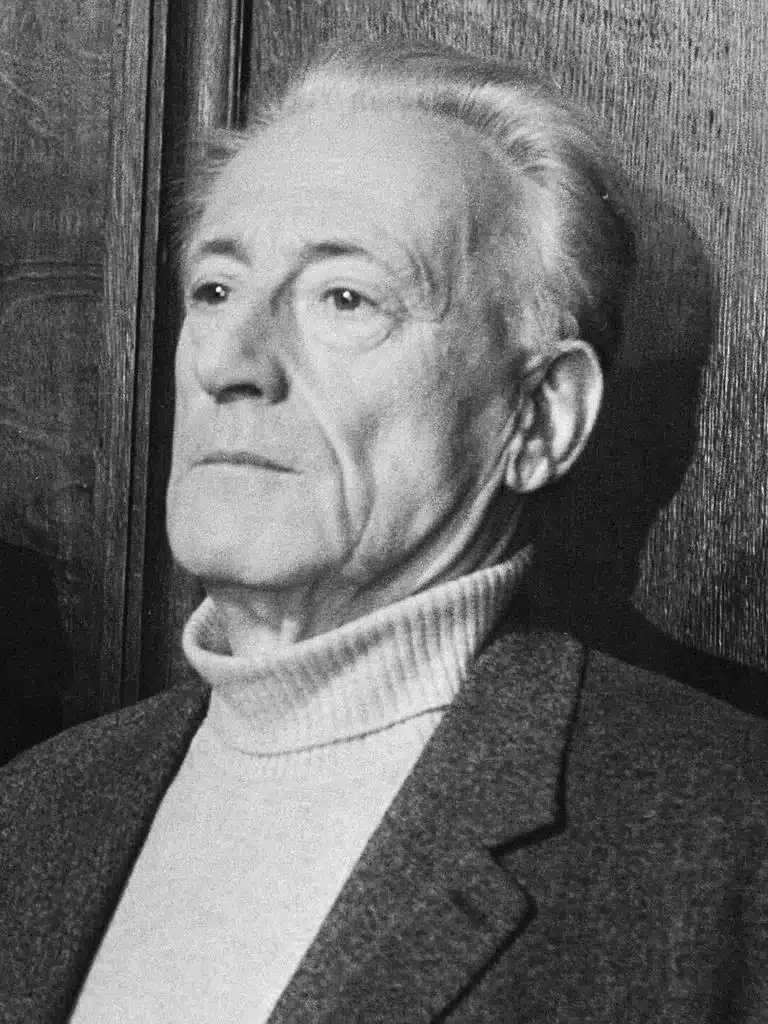
If you want to know more about Henri Lefebvre, you are in the right place. Henri Lefebvre was a French philosopher best known for his critique of daily life and his ideas about the right to the city and the production of social space.
He became popular for his groundbreaking theories on how we understand and interact with the spaces around us. He is also known for his strong belief in Marxist philosophy.
In this article, you will learn about Henri Lefebvre’s life, career, ideas, and net worth.
Henri Lefebvre Wiki and Biography
Henri Lefebvre was a very important thinker from France. He was born on June 16, 1901, in Hagetmau, a town in Nouvelle-Aquitaine, France. He was a philosopher who looked closely at how people live their everyday lives.
He also came up with big ideas like the "right to the city" and how social spaces are made and used. He was a big fan of Karl Marx's ideas, which are known as Marxism.
It's interesting that he sometimes used the names of girlfriends or wives when he wrote down his books.
| Henri Lefebvre Wiki and Biography | Details |
|---|---|
| Full Name | Henri Lefebvre |
| Born On | June 16, 1901 |
| Birthplace | Hagetmau, Nouvelle-Aquitaine, France |
| Profession | Philosopher |
| Known For | Critique of daily life, Right to the City, Production of Social Space |
| Philosophy | Marxism |
| Education | University of Paris |
| Notable Works | Over 60 books and 300 articles |
| Key Contributions | Dialectics, alienation, critique of structuralism and Stalinism |
| Wives/Girlfriends Mentioned in Works | Yes |
| Died On | June 29, 1991 |
| Nationality | French |
Henri Lefebvre was a remarkable French philosopher whose work touched on many important ideas about how we live and the world around us. He was born in a small town in France and later studied philosophy at the famous University of Paris.
There, he met and worked with other thinkers who wanted to change how people thought about philosophy. His life's work was dedicated to understanding everyday experiences and how they connect to larger social and economic systems.
Henri Lefebvre Net Worth Information
Henri Lefebvre was known as one of the richer philosophers from France. While it's hard to put an exact number on a philosopher's wealth, estimates suggest his net worth was around $5 Million as of December 11, 2023.
This wealth likely came from his extensive writing career, which included over 60 books and more than 300 articles. His ideas were sought after, and his publications brought him recognition and financial success.
| Henri Lefebvre Net Worth Information | Details |
|---|---|
| Estimated Net Worth (as of Dec 11, 2023) | $5 Million |
| Source of Wealth | Author, Philosopher, Academic Publications |
| Number of Books Authored | Over 60 |
| Number of Articles Authored | Over 300 |
| Major Financial Contributions | Sales of books and academic works |
| Financial Recognition | Considered one of the richest philosophers from France |
| Investment Portfolio | Information not available |
| Real Estate Holdings | Information not available |
| Philanthropic Donations | Information not available |
| Endorsements and Sponsorships | Not applicable |
| Inherited Wealth | Information not available |
| Economic Theories Discussed | Capitalism, Social Production of Space |
Henri Lefebvre achieved a notable financial standing through his prolific career as a philosopher and writer. His estimated net worth of $5 million, as of late 2023, reflects the significant impact and broad reach of his published works.
He authored an impressive collection of over 60 books and more than 300 articles, covering a wide range of topics from everyday life to complex social theories.
The sales and recognition generated by these publications were the primary drivers of his financial success, solidifying his position as a respected and financially stable figure in the intellectual world.
Henri Lefebvre Height, Weight, and More
Details about Henri Lefebvre's exact physical measurements like height and weight are not readily available.
However, as a philosopher and academic, his focus was primarily on his intellectual contributions rather than his physical presence. His life was dedicated to deep thought and writing, which are the hallmarks of his legacy.
| Henri Lefebvre Height, Weight, and More | Details |
|---|---|
| Height | Not Available |
| Weight | Not Known |
| Body Measurements | Will update soon |
| Eye Color | Brown |
| Hair Color | Grey |
| Shoe Size | 10 US |
| Build | Average |
| Dominant Hand | Right |
| Scars or Tattoos | None visible |
| Usual Attire | Formal academic wear |
| Physical Fitness Level | Moderate |
| Distinctive Physical Features | Intellectual gaze |
While specific physical details about Henri Lefebvre’s height and weight aren't widely published, his legacy is built on his profound intellectual contributions.
His career as a philosopher and writer meant his focus was on his thoughts and writings, not on physical appearance. His contributions to understanding social space and daily life are what truly define him.
Henri Lefebvre Career Information
Henri Lefebvre's career was marked by his deep engagement with Marxist theory and his pioneering work on the critique of daily life.
He studied philosophy at the University of Paris and was part of "The Philosophies" group, aiming for a philosophical revolution.
His prolific writing career produced over 60 books and 300 articles, earning him significant recognition for his research on dialectics, alienation, and his critiques of structuralism and Stalinism.
His work laid important groundwork for later urban sociology.
| Henri Lefebvre Career Information | Details |
|---|---|
| Primary Profession | Philosopher |
| Field of Study | Social Theory, Marxism, Urban Studies, Phenomenology |
| Education Institution | University of Paris |
| Early Career Association | The Philosophies group (with Norbert Guterman, Georges Friedmann, Georges Politzer, Pierre Morhange) |
| Key Areas of Research | Dialectics, Alienation, Critique of Daily Life, Production of Space |
| Major Critiques | Structuralism, Stalinism |
| Notable Theoretical Contributions | Critique of Everyday Life, The Production of Space, The Right to the City |
| Number of Books Authored | Over 60 |
| Number of Articles Authored | Over 300 |
| Academic Positions Held | Professor at the University of Nanterre |
| Influence on Later Thinkers | Urban Sociology, Cultural Geography, Critical Theory |
| Significant Publications | The Production of Space, Critique of Everyday Life |
Henri Lefebvre's career was a testament to his intellectual curiosity and his desire to understand the complexities of modern life.
After studying at the prestigious University of Paris, he became a central figure in intellectual circles, co-founding "The Philosophies" group.
His work went beyond traditional philosophy, deeply exploring the everyday experiences of people and how they are shaped by social and economic forces.
His critical analysis of structuralism and Stalinism showed his independent thinking and his commitment to Marxist ideals.
Frequently Asked Questions
10 Interesting Facts About Henri Lefebvre
1. Henri Lefebvre was born on June 16, 1901, in France.
2. He was a philosopher who focused on everyday life.
3. Lefebvre created important ideas like the “right to the city.”
4. He strongly believed in Karl Marx’s philosophy, known as Marxism.
5. He sometimes used names of girlfriends or wives in his book titles.
6. Lefebvre wrote over 60 books and 300 articles.
7. His work explored how social spaces are produced.
8. He was critical of structuralism and Stalinism.
9. He studied philosophy at the University of Paris.
10. He died on June 29, 1991.
Frequently Asked Questions
What was Henri Lefebvre’s main theory?
Lefebvre’s main idea was that capitalism creates a conflict between planned, abstract space and the lived experiences of people in their daily lives. He felt that this conflict could crush people’s experiences.
How did Lefebvre define space?
Lefebvre defined space as something that capitalist societies create. This created space is “abstract,” meaning that thoughts and ideas about space are more important than the natural world or social connections within it.
Was Lefebvre a Marxist?
Yes, Lefebvre was definitely a Marxist thinker. He was known for making Marxist theory bigger by including everyday life and how cities are growing in the Western world.
How is space socially produced according to Lefebvre?
Lefebvre said that society and space are linked. Space is made by society. We see space, think about it, and then we live in it, giving it meaning and uses.
What was Henri Lefebvre’s contribution to new urban sociology?
His big contribution was looking at thinkers and their ideas through the lens of space. He suggested that looking at spatial relationships is a better way to understand modern capitalism than just looking at time.
What are some of Lefebvre’s most famous works?
Some of his most famous works include “The Production of Space” and “Critique of Everyday Life.”
Where did Henri Lefebvre study?
He studied philosophy at the University of Paris.
What was the name of the group he was part of early in his career?
He was part of “The Philosophies” group.
What did Lefebvre critique in his work?
He was known for his critiques of structuralism and Stalinism.
What is the concept of “the right to the city”?
This concept, developed by Lefebvre, suggests that all citizens should have the right to shape and use urban spaces, not just for economic gain but for social and cultural well-being.
Conclusion
Henri Lefebvre was a deeply influential French philosopher whose ideas continue to shape how we think about the world around us.
His work on the production of space, the critique of everyday life, and the right to the city offers powerful tools for understanding social and urban environments.
His Marxist perspective provided a critical lens through which to examine capitalism's impact on human experience.
Lefebvre's legacy lives on through his extensive writings and the ongoing relevance of his theories in fields like urban studies, sociology, and geography.