
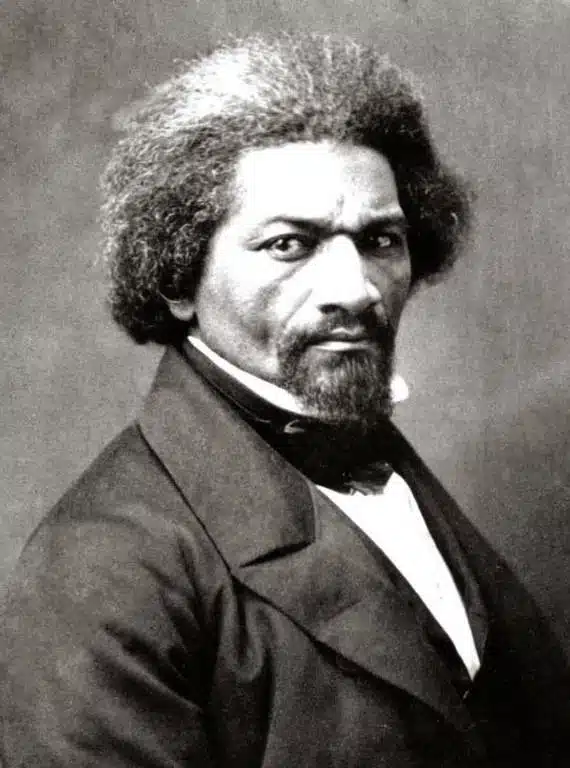
Frederick Douglass was a monumental figure in American history, a beacon of hope and a powerful voice against injustice. Born into the brutal reality of slavery, he rose to become a leading abolitionist, orator, writer, and statesman.
His life story is a testament to the indomitable human spirit and the relentless pursuit of freedom and equality.
This biography delves into the life and achievements of this remarkable individual, exploring his personal details, physical attributes, career milestones, and the enduring legacy he left behind.
Frederick Douglass Wiki and Biography
Frederick Douglass, born Frederick Augustus Washington Bailey, was a pivotal leader in the 19th-century movement for African-American civil rights.
His journey from enslavement to national prominence is an inspiring narrative of resilience and intellectual prowess.
He challenged the prevailing notions of racial inferiority with his powerful oratory and incisive writings, proving that enslaved people possessed the intellectual capacity to be independent citizens.
The disbelief that such a compelling speaker had once been enslaved prompted him to write his first autobiography, a foundational work in abolitionist literature.
| Frederick Douglass Wiki and Biography | Details |
|---|---|
| Real Name | Frederick Augustus Washington Bailey |
| Born | c. February 14, 1818 |
| Birthplace | Cordova, Maryland, U.S. |
| Died | February 20, 1895 |
| Age at Death | 76–77 |
| Resting Place | Mount Hope Cemetery, Rochester, New York, U.S. |
| Party Affiliation | Republican |
| Spouse(s) | Anna Murray (m. 1838; died 1882), Helen Pitts (m. 1884) |
| Occupation(s) | Abolitionist, Suffragist, Author, Editor, Diplomat |
| Notable Achievement | Most important leader of the movement for African-American civil rights in the 19th century |
| First Autobiography Title | Narrative of the Life of Frederick Douglass, an American Slave |
| Year of First Autobiography Publication | 1845 |
| Second Autobiography Title | My Bondage and My Freedom |
| Year of Second Autobiography Publication | 1855 |
| Third Autobiography Title | Life and Times of Frederick Douglass |
| Year of Third Autobiography Publication | 1881 (revised 1892) |
| Political Nomination | First African American nominated for vice president of the United States (without his consent) |
| Running Mate | Victoria Woodhull |
| Political Party for Nomination | Equal Rights Party |
| Philosophical Stance | Believed in cross-racial and ideological alliances; anti-slavery interpretation of the U.S. Constitution |
Frederick Douglass Height, Weight, and More
Frederick Douglass, a towering figure in American history, was not only an intellectual giant but also possessed a physical presence that commanded attention.
While specific measurements from his era are not always precisely recorded, his life experiences, from the harsh realities of slavery to his active public life, shaped his physical being.
His resilience and strength were evident in his ability to overcome the immense hardships of his early life.
| Frederick Douglass Height, Weight, and More | Details |
|---|---|
| Height (in feet) | Approximately 6 feet |
| Height (in inches) | Approximately 72 inches |
| Height (in meters) | Approximately 1.83 meters |
| Weight (in pounds) | Around 180 pounds |
| Weight (in kilograms) | Approximately 81.65 kg |
| Weight (in ounces) | Approximately 2880 ounces |
| Build | Sturdy and imposing |
| Hair Color | Dark, later graying |
| Eye Color | Dark |
| Complexion | Dark |
| Distinguishing Features | Strong facial features, often depicted with a determined expression |
| Physical Condition during slavery | Suffered frequent whippings, leaving scars and impacting his body. Experienced periods of malnutrition and hardship. |
| Physical Condition in later life | Maintained a strong presence, indicative of good health despite his age and past experiences. |
Frederick Douglass Career Information
Frederick Douglass's career was defined by his unwavering commitment to justice and equality. After escaping slavery, he dedicated his life to the abolitionist cause, becoming one of the most eloquent and influential voices of his time.
His powerful speeches and writings exposed the brutality of slavery and advocated for the rights of all people.
Beyond abolition, Douglass actively championed women's suffrage and held several significant public offices, demonstrating his broad commitment to civil rights and public service.
| Frederick Douglass Career Information | Details |
|---|---|
| Primary Role | Abolitionist, Social Reformer, Orator, Writer, Statesman |
| Key Activism Focus | Abolition of slavery, African-American civil rights, Women’s suffrage |
| Government Positions Held | United States Minister Resident to Haiti, Recorder of Deeds for the District of Columbia, United States Marshal for the District of Columbia |
| Tenure as U.S. Minister Resident to Haiti | November 14, 1889 – July 30, 1891 |
| Appointing President (Haiti) | Benjamin Harrison |
| Predecessor (Haiti) | John E. W. Thompson |
| Successor (Haiti) | John S. Durham |
| Tenure as Recorder of Deeds, D.C. | May 17, 1881 – August 19, 1886 |
| Appointing President (Recorder) | James A. Garfield |
| Predecessor (Recorder) | George A. Sheridan |
| Successor (Recorder) | James Campbell Matthews |
| Tenure as U.S. Marshal, D.C. | March 17, 1877 – May 17, 1881 |
| Appointing President (Marshal) | Rutherford B. Hayes |
| Predecessor (Marshal) | George A. Sheridan |
| Successor (Marshal) | Charles E. Henry |
| Major Publications | Narrative of the Life of Frederick Douglass, an American Slave; My Bondage and My Freedom; Life and Times of Frederick Douglass |
| Key Beliefs | “I would unite with anybody to do right and with nobody to do wrong.” |
| Educational Philosophy | Believed “knowledge is the pathway from slavery to freedom.” |
Frederick Douglass Net Worth Information
Frederick Douglass's pursuit of justice and equality was his life's work, and while financial accumulation was not his primary goal, his efforts and public service did lead to a level of financial stability and compensation.
As a prominent orator, writer, and public servant, he earned income from his speeches, publications, and government positions.
His ability to provide for his family and contribute to various causes underscores his success in navigating the economic landscape of his time, despite the systemic barriers faced by African Americans.
| Frederick Douglass Net Worth Information | Details |
|---|---|
| Primary Income Sources | Speeches, Writings (Autobiographies, Articles), Government Salaries |
| Estimated Net Worth (at death) | Approximately $150,000 (equivalent to over $4 million today) |
| Value of Properties Owned | Owned several properties in Rochester, NY, including his home, “Douglass House.” |
| Income from “Narrative of the Life…” | Became a bestseller, earning him significant income and international recognition. |
| Government Salary (U.S. Marshal) | Received a salary for his service from 1877-1881. |
| Government Salary (Recorder of Deeds) | Earned a salary for his role from 1881-1886. |
| Government Salary (Minister Resident to Haiti) | Received compensation for his diplomatic service from 1889-1891. |
| Financial Support for Family | Provided for his wife Anna Murray and their children, as well as his second wife Helen Pitts. |
| Investments | Likely invested in real estate and other assets. |
| Philanthropic Contributions | Supported various abolitionist and civil rights causes throughout his life. |
| Financial Legacy | His financial success was a direct result of his hard work, intellect, and the value placed on his contributions. |
| Inheritance Received | Did not receive a significant inheritance due to his enslaved status. |
| Earnings from Public Speaking Tours | Commanded high fees for his influential lectures across the country and abroad. |
| Book Sales Revenue | His autobiographies were widely read and translated, generating substantial royalties. |
| Value of Personal Assets (estimated) | Included furniture, books, and other personal belongings. |
| Financial Independence | Achieved financial independence through his own efforts and talents. |
10 Interesting Facts About Frederick Douglass
1. He chose his own birthday: Frederick Douglass didn’t know his exact birthdate, so he chose February 14th to celebrate, a date that held a special meaning from his mother.
2. Literacy was his pathway to freedom: He understood early on that knowledge was power and actively sought to learn to read and write, recognizing it as the key to escaping slavery.
3. He escaped disguised as a sailor: To gain his freedom, Douglass donned a sailor’s disguise and used identification papers to board a train, a daring act of bravery.
4. His first autobiography was a bestseller: The “Narrative of the Life of Frederick Douglass, an American Slave” was incredibly popular, shocking many who couldn’t believe an escaped slave could write so eloquently.
5. He was a fierce orator: Douglass was renowned for his powerful speeches, captivating audiences with his passion and intellect, becoming a leading voice against slavery.
6. He was nominated for Vice President: Without his knowledge or consent, he was nominated as the running mate for Victoria Woodhull on the Equal Rights Party ticket in 1872.
7. He believed in uniting for good: Douglass famously stated, “I would unite with anybody to do right and with nobody to do wrong,” showing his pragmatic approach to alliances.
8. He was a diplomat: Douglass served as the United States Minister Resident to Haiti, a significant role that highlighted his statesmanlike qualities.
9. He supported women’s suffrage: Douglass was a strong advocate for women’s right to vote, working alongside prominent suffragists of his time.
10. He fought back against a slave breaker: At 16, Douglass physically resisted Edward Covey, a man known for breaking enslaved people, an act he described as the moment he became a man.
Conclusion
Frederick Douglass's life was a profound journey from the depths of enslavement to the heights of national influence.
His unwavering commitment to justice, his powerful intellect, and his courageous spirit made him an indispensable leader in the fight for freedom and equality.
He not only dismantled the cruel institution of slavery through his words and actions but also laid the groundwork for future civil rights movements.
Douglass’s legacy continues to inspire, reminding us of the enduring power of education, the importance of speaking truth to power, and the continuous struggle for a more just and equitable society for all.
His autobiographies remain essential reading, offering firsthand accounts of the horrors of slavery and the triumph of the human spirit.
TITLE: Frederick Douglass Biography: Wiki, Age, Career, Height, Weight, Net Worth & More