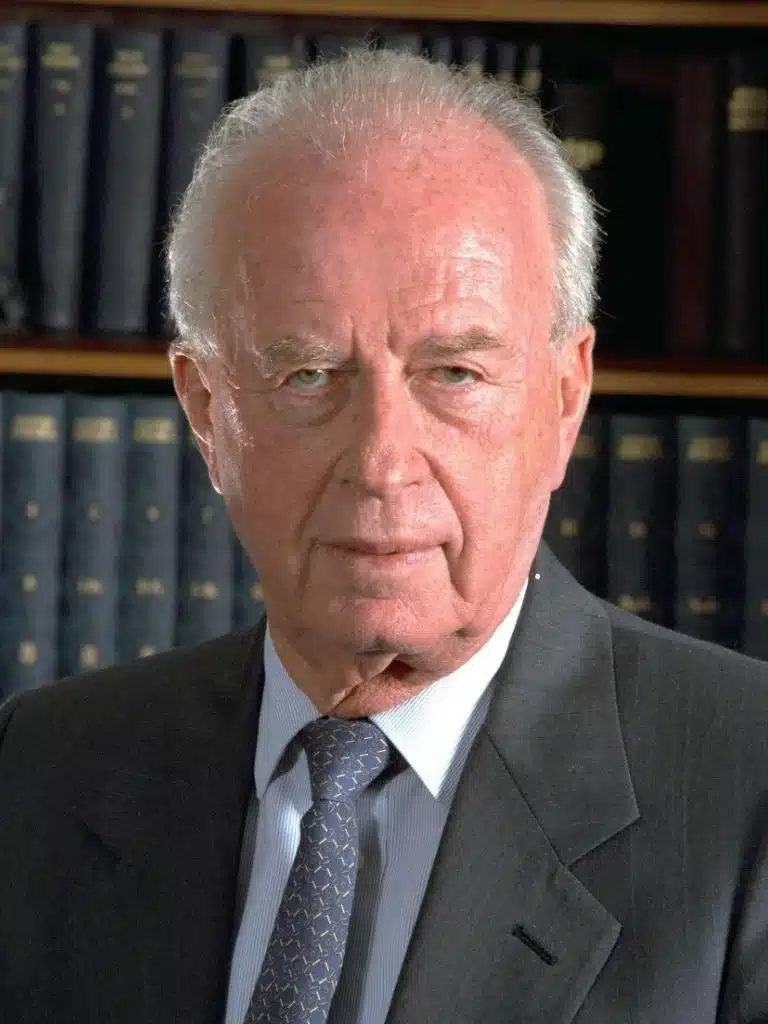
Yitzhak Rabin stands as a monumental figure in Israeli history, a leader whose life was tragically cut short but whose impact continues to resonate.
Born in Jerusalem, he rose through the ranks of military and political leadership, ultimately serving as Prime Minister of Israel twice.
His journey was marked by significant achievements and a profound dedication to his nation, culminating in a quest for peace that earned him international acclaim.
This exploration delves into the key aspects of his life, career, and enduring legacy.
Yitzhak Rabin Wiki and Biography
| Yitzhak Rabin Wiki and Biography | Details |
|---|---|
| Full Name | Yitzhak Rabin |
| Date of Birth | March 1, 1922 |
| Place of Birth | Jerusalem, Jerusalem District, Israel |
| Nationality | Israeli |
| Profession | Politician, World Leader |
| First Prime Minister Term | 1974 – 1977 |
| Second Prime Minister Term | 1992 – 1995 |
| Spouse | Leah Rabin |
| Assassinated By | Yigal Amir |
| Notable Achievement | First native-born Prime Minister of Israel, Nobel Peace Prize Laureate |
| Date of Death | November 4, 1995 |
| Place of Death | Tel Aviv-Yafo, Israel |
Yitzhak Rabin was more than just a political leader; he was a native son of Israel who rose to shape its destiny. Born in the historic city of Jerusalem, his early life was deeply intertwined with the burgeoning nation.
He served as Prime Minister twice, a testament to his significant influence and the trust placed in him by the Israeli people. His tenure was marked by both the challenges of leadership and a resolute pursuit of peace.
The tragic circumstances of his assassination, carried out by a right-wing Israeli radical who opposed the Oslo Accords, underscore the intense political climate of the time and the profound impact of his peace efforts.
His marriage to Leah Rabin during the Arab-Israeli War highlights his commitment not only to his country but also to his personal life amidst national turmoil.
Yitzhak Rabin Height, Weight, and More
| Yitzhak Rabin Height, Weight, and More | Details |
|---|---|
| Height (in Feet) | 5.9 feet |
| Height (in Meters) | 1.8 meters |
| Height (in Inches) | 71 inches |
| Weight (in Kilograms) | 78 kg |
| Weight (in Pounds) | 171.96 pounds |
| Weight (in Ounces) | 2751.36 ounces |
| Eye Color | Brown |
| Hair Color | Gray |
| Shoe Size | 10 (US) |
| Body Type | Average |
| Build | Athletic |
While Yitzhak Rabin is primarily remembered for his political and military leadership, understanding his physical presence offers another dimension to his persona.
Standing at a respectable 5 feet 9 inches (approximately 1.8 meters), he possessed a stature that conveyed a sense of presence and authority.
His weight, around 78 kilograms (about 171.96 pounds), suggested an athletic build, likely a carry-over from his active military career.
These physical attributes, combined with his brown eyes and graying hair, contributed to his distinct appearance.
Information about his shoe size and body type further fills out the picture of the man behind the historical decisions, reminding us that leaders, like all individuals, have physical characteristics that are part of their overall identity.
Yitzhak Rabin Career Information
| Yitzhak Rabin Career Information | Details |
|---|---|
| Military Career Start | 1948 Arab-Israeli War |
| Chief of the General Staff | 1964 |
| Key Military Victory | 1967 Six-Day War |
| Ambassador to the United States | 1968 – 1973 |
| First Term as Prime Minister | 1974 – 1977 |
| Successor to | Golda Meir |
| Second Term as Prime Minister | 1992 – 1995 |
| Key Peace Initiative | Oslo Accords |
| Nobel Peace Prize Year | 1994 |
| Nobel Peace Prize Awarded For | Efforts to create peace in the Middle East |
| Political Ideology | Generally considered center-left |
| Resignation from Prime Minister Post (1977) | Due to discovery of a joint bank account with his wife in Washington, an infraction of Israeli law. |
Yitzhak Rabin's career was a remarkable trajectory of service, from the front lines of battle to the highest echelons of political power.
His military prowess was evident early on, particularly during the 1948 Arab-Israeli War, where he played a crucial role in securing Jerusalem.
His appointment as Chief of the General Staff in 1964 placed him at the helm during a pivotal moment in Israeli history, leading the nation to a decisive victory in the 1967 Six-Day War.
Following his distinguished military service, Rabin transitioned into diplomacy, serving as Israel's ambassador to the United States, a period that solidified crucial ties between the two nations.
His ascent to Prime Minister twice, first succeeding Golda Meir and later leading a government that pursued the groundbreaking Oslo Accords, cemented his legacy as a leader deeply committed to peace in the Middle East, a pursuit recognized by the Nobel Peace Prize.
Yitzhak Rabin Net Worth Information
| Yitzhak Rabin Net Worth Information | Details |
|---|---|
| Estimated Net Worth | $5 Million |
| Source of Wealth | World Leader, Politician |
| Net Worth Update Date | December 11, 2023 |
| Financial Disclosure Detail | Discovered joint account of $1000 in Washington with his wife. |
| Resignation Due to Financial Disclosure | Yes, in 1977 from the post of Prime Minister. |
| Financial Infraction | Holding a joint account with his wife in Washington was an infraction of Israeli law at the time. |
| Public Perception of Wealth | Considered one of the richest World Leaders from Israel. |
| Investment Information | Joint account in Washington. |
| Family Financial Holdings | Joint account with spouse. |
| Financial Legacy | His financial dealings, though minor in scale, led to a significant political consequence. |
| Total Assets (Estimated) | $5 Million |
| Income Sources | Prime Ministerial salary, military service benefits, diplomatic service compensation. |
Yitzhak Rabin's financial standing, while not the primary focus of his public life, offers a glimpse into the personal aspects of his career.
Estimated at $5 million, his net worth reflects a life dedicated to public service, encompassing his roles as a military leader, diplomat, and twice-serving Prime Minister of Israel.
The details of a joint account held with his wife in Washington, though a modest sum of $1000, became a significant point of public scrutiny and led to his resignation in 1977, as it was considered an infraction of Israeli law at the time.
This event highlights the stringent standards expected of public officials and the transparency required in their financial dealings.
Despite this incident, Rabin remained a prominent figure, and his financial legacy is intertwined with his political journey.
Why was Yitzhak Rabin important?
Yitzhak Rabin was incredibly important because he was a pivotal military leader and a two-time Prime Minister of Israel.
As Chief of the General Staff, he led Israel to a decisive victory in the 1967 Six-Day War, a crucial moment that shaped the geopolitical landscape of the Middle East.
His diplomatic service as Ambassador to the United States further strengthened vital international ties.
During his premierships, he was instrumental in advancing peace processes, most notably the Oslo Accords, which aimed to create a framework for peace between Israelis and Palestinians.
His commitment to peace, even in the face of significant opposition, made him a central figure in the quest for stability in the region.
Why did Yitzhak Rabin win the Nobel Prize?
Yitzhak Rabin was awarded the Nobel Peace Prize in 1994, jointly with Yasser Arafat and Shimon Peres. This prestigious award recognized their significant efforts to create peace in the Middle East.
The prize specifically honored their contributions to the Oslo Accords, a groundbreaking agreement that sought to establish a path toward a peaceful resolution of the Israeli-Palestinian conflict.
Their work represented a bold step towards dialogue and reconciliation in a region long plagued by conflict.
What is a Rabin?
"Rabin" is a Hebrew surname that has historical and religious connotations. It is derived from the Hebrew word "rav," which means Rabbi, or it can refer to the name of a specific Rabbi named Abin.
The most globally recognized individual bearing this surname is Yitzhak Rabin, the former Prime Minister of Israel and a Nobel Peace Prize laureate, whose life and achievements have brought significant prominence to the name.
Who killed Israel prime minister?
The Israeli Prime Minister Yitzhak Rabin was assassinated by Yigal Amir.
Amir was described as a right-wing Israeli radical who opposed Rabin's signing of the Oslo Accords, which he believed were detrimental to Israel's security and interests.
How was Yitzhak Rabin assassination?
Yitzhak Rabin was assassinated on November 4, 1995, in Tel Aviv-Yafo, Israel. He was shot by Yigal Amir shortly after attending a peace rally in the city square.
The assassination occurred as Rabin was leaving the rally, making his death a deeply shocking and tragic event for Israel and the international community.
10 Interesting Facts About Yitzhak Rabin
1. Yitzhak Rabin was the first native-born Prime Minister of Israel.
2. He led the Israeli forces to victory in the 1967 Six-Day War as Chief of the General Staff.
3. Rabin served as Israel’s ambassador to the United States from 1968 to 1973.
4. He was awarded the Nobel Peace Prize in 1994 for his peace efforts.
5. His assassination was carried out by Yigal Amir, a right-wing extremist.
6. Rabin married Leah Rabin during the Arab-Israeli War in 1948.
7. A financial disclosure involving a joint bank account led to his resignation in 1977.
8. He was a prominent figure in the signing of the Oslo Accords.
9. Rabin’s birthplace was Jerusalem, making him a true son of the land.
10. His death occurred just after he had addressed a large peace rally.
Conclusion
Yitzhak Rabin's life was a testament to dedication, leadership, and a profound commitment to peace.
From his early days as a soldier defending his nascent nation to his leadership as Prime Minister, Rabin consistently demonstrated courage and a strategic vision.
His military acumen was instrumental in securing Israel's safety during critical conflicts, most notably the Six-Day War.
Transitioning to statesmanship, he embraced the difficult path of diplomacy, believing that peace was not only possible but essential for the future of the region.
His partnership with Yasser Arafat and Shimon Peres in the Oslo Accords marked a watershed moment, earning them the Nobel Peace Prize and offering a glimmer of hope for a lasting resolution to the Israeli-Palestinian conflict.
However, Rabin's pursuit of peace came at a tragic cost. His assassination by a radical extremist underscored the deep divisions and intense opposition he faced. Yet, his legacy transcends the violence of his death.
He is remembered as a man who dared to dream of a peaceful coexistence, who understood the complexities of the Middle East, and who bravely worked towards a future where conflict could be replaced by dialogue.
His impact on Israel and the broader quest for Middle East peace remains a significant part of his enduring story, inspiring future generations to continue the pursuit of a more peaceful world.
The circumstances of his life and death serve as a powerful reminder of the sacrifices made in the pursuit of peace and the enduring challenges that lie in achieving it.
10 FAQs About Yitzhak Rabin
- Q1: Who was Yitzhak Rabin?
A1: Yitzhak Rabin was an Israeli politician and statesman who served as the Prime Minister of Israel twice.
- Q2: When was Yitzhak Rabin born?
A2: Yitzhak Rabin was born on March 1, 1922.
- Q3: What major war did Yitzhak Rabin lead Israel to victory in?
A3: He led Israel to victory in the 1967 Six-Day War as Chief of the General Staff.
- Q4: Why did Yitzhak Rabin win the Nobel Peace Prize?
A4: He won the Nobel Peace Prize in 1994 for his efforts to create peace in the Middle East, specifically for his role in the Oslo Accords.
- Q5: Who assassinated Yitzhak Rabin?
A5: Yitzhak Rabin was assassinated by Yigal Amir, a right-wing Israeli radical.
- Q6: When and where was Yitzhak Rabin assassinated?
A6: He was assassinated on November 4, 1995, in Tel Aviv-Yafo, Israel.
- Q7: What was the significance of the Oslo Accords?
A7: The Oslo Accords were a peace initiative aimed at creating a framework for resolving the Israeli-Palestinian conflict.
- Q8: What led to Yitzhak Rabin’s resignation in 1977?
A8: He resigned due to the discovery of a joint bank account with his wife in Washington, which was an infraction of Israeli law at the time.
- Q9: Was Yitzhak Rabin married?
A9: Yes, Yitzhak Rabin was married to Leah Rabin.
- Q10: What is the meaning of the surname “Rabin”?
A10: “Rabin” is a Hebrew surname derived from the word “rav” meaning Rabbi, or from the name of Rabbi Abin.